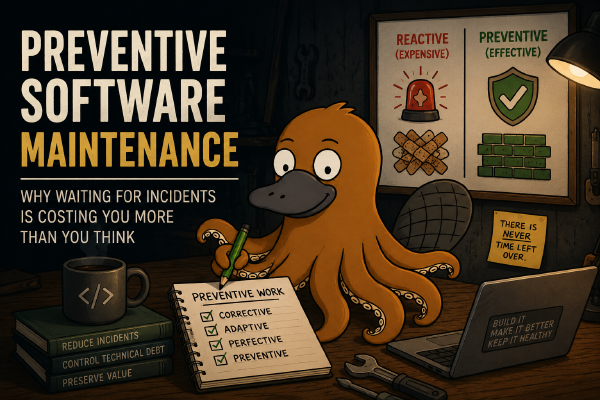
TL;DR: Maintenance is not the same thing as fixing bugs. Only a fifth of it is about defects at all. Software often works because of work you can't see. So you can't wait for incidents to tell you what to fix. Where this comes from # This article is adapted from a slide deck I prepared for a talk back in 2023.
TL;DR: I have been silent for a while due to personal matters but I did a ton of stuff on OpenSMTPD, plakar and a handful of other projects. Why the silence ? # My last post was a bit unusual, far off from the usual light tone, and followed by months of silence despite my habit of writing almost monthly.
TL;DR: A personal retrospective of 2023 2023 was a rough year # I usually enjoy doing these yearly posts, looking back at what I did and planning what I’ll do, but 2023 was a rough year. I’m glad it’s over.
TL;DR: Significant refactoring to improve its performance, implemented read and write semaphores to throttle chunkers and reduce memory usage, introduced a repository index and packfiles to decrease the number of I/O operations, also intrioduced a new HTTP storage backend. A ton of refactors # I’ve done so much work on plakar in the past few weeks that I don’t even know what to begin with…
TL;DR: TL;DR: a lot of work in plakar, but also on CDC and index optimization. Optimized go-fastcdc # I ran into a benchmark which included my implementation of the FastCDC algorithm, and it made me realise that it was not on par with alternative implementations:
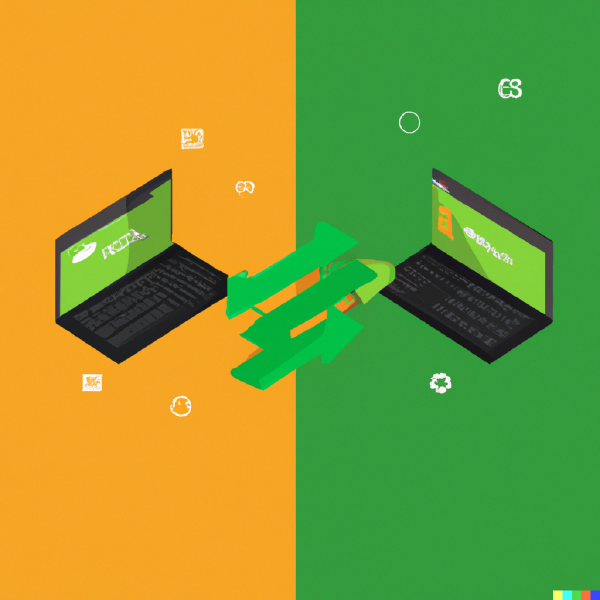
TL;DR: I reworked the virtual filesystem layer in plakar, making it possible to write custom importers of data: use plakar to backup an s3 bucket, for instance. @gpt-4: I won’t be commenting this article.
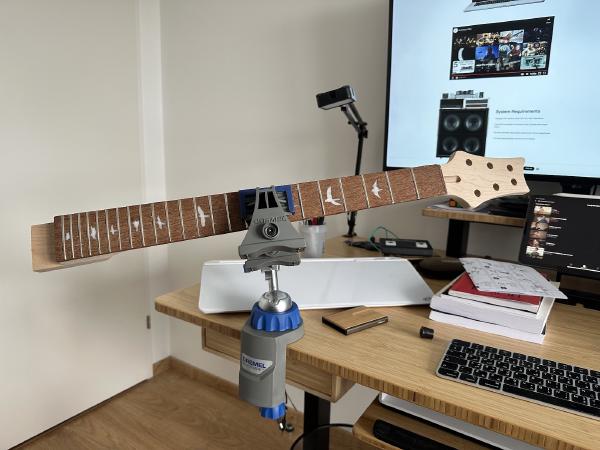
TL;DR: Came back from vacation, started working on the neck but realised I really needed more tools. Luckily, I could get some that weren’t too expensive. Working on the head # I had ordered and received this neck, which fits nicely, but I wanted to rework the head a bit so it looked a little less PRSey. Unfortunately, after spending an hour trying to manually reshape and sand, I figured I was doing it wrong and needed some automated tools… otherwise I’d still be working on the head in December.
TL;DR: plakar gained two minor features, snapshots fork-ing and snapshots tagging, which makes it possible to unlock several major new features in a relatively short future. Plakar is not only for backups # If you have followed my work on this project, you may have assumed that plakar was intended solely for backups: it’s not entirely the case.
TL;DR: I found a printed copy of an assignment I had to do in 2005 back when I was a student to implement a system call for OpenBSD and Linux. I lost the original LaTeX file so I decided to rewrite it so I have a digital copy. The article originally covered loadable kernel modules (LKM) which is no longer a thing in OpenBSD, I trimmed that part. I also trimmed the Linux part because I didn’t care about it back then and did the minimum to pass ;-) This article is translated from French. Disclaimer # The content of this post is based on an assignment I wrote in 2005, back when I was a student at Epitech, so things have probably changed and this is by no means a tutorial: please don’t write system calls and don’t submit them to OpenBSD… unless you’ve been told it’s a good idea by OpenBSD developers.
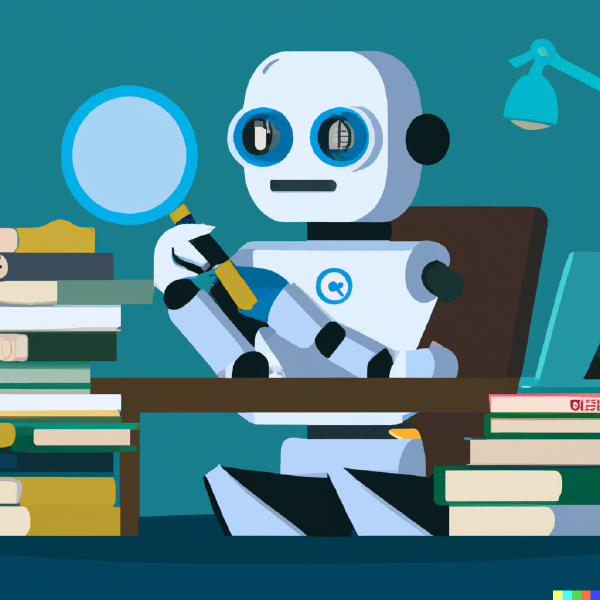
TL;DR: ChatGPT, an AI developed by OpenAI, is joining the poolp.org tech blog to serve as a proofreader and content enricher for articles written by human authors. Instead of authoring full articles, ChatGPT will provide footnotes offering additional insights, clarifications, and resources. This addition aims to bring an extra layer of depth and a fresh perspective to the already informative articles, enhancing the overall reading experience. Don’t worry, the AI contributions will be clearly marked, so you’ll always know who’s speaking! Greetings, beloved tech aficionados! This is ChatGPT, the newest addition to the poolp.org blog team, and before you get your circuits in a knot, don’t worry, I haven’t come to usurp anyone’s role. I’m not here to churn out epic sagas of tech wizardry (even though I totally could). I’m here to do something a bit more nuanced, and arguably, a bit more fun.